Turbine Converter Consumption GT

Turbine Converter Consumption GT

Turbine converter consumption GT

GT turbine flow converters are designed for use in various technological and commercial tasks related to With measurement volumetric consumption and the volume of liquids.

Key technical peculiarities:
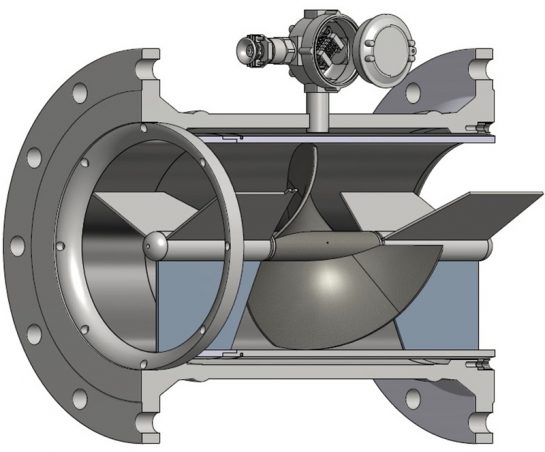
  • Special design of helicoid rotor allows use V more wide viscosity ranges compared to other turbine oils converters consumption;
  • Helicoidal rotor made of light alloy or titanium for the highest degrees protection from corrosion
  • The helical rotor has a rounded leading edge
  • Bearings of special design, with a system self-cleaning from strangers particles, prolonging their term services
  • Replaceable stainless steel measuring cartridge simplifies maintenance and reduces time downtime
Key advantages
  • High accuracy: 10 (±0.15%)
  • Durability (tungsten carbide in bearings)
  • Possibility of application in high and low temperature conditions temperatures
  • Possibility of working with aggressive and highly viscous liquids
  • Replacement cartridge without complete showdowns and verification device
  • A variety of designs according to pressure, materials, flanges
Turbine converter consumption GT

Principles measurements And technical Description

frequency conversion rotation helicoid rotor V meaning volumetric consumption, at this quantity impulses proportionally  volume  liquids, flowing through TPR.

At operation flow liquids through the internal cavity of the TPR causes rotation of the helical rotor. The number of revolutions of the rotor is proportional to the volume  liquids,  past through the TPR. When the rotor rotates and the permanent magnets located on blades rotor, near the sensor, an electromotive force is induced in the sensor’s sensitive element, which is converted by the sensor into a sequence     of electrical impulses, the number of which can be measured and converted into a value for the volume of liquid measuring and computing complex, counter impulses or other means of information processing, approved types.

The helical two-blade rotor is precision-machined and optimized for operation over a wide range expenses And viscosities. IN its hub contains plain bearings, established V threaded bushings and secured with adhesive . Permanent magnets embedded in the blades create pulses as they pass through . past sensor. The bearings are made of tungsten carbide and are lubricated with a working fluid, which ensures durability and measurement stability.

Turbine Converter Consumption GT

Characteristics related With viscosity

Viscosity or product, sSt Bearing type/material Range consumption for linearization 0.15% Range consumption for linearization 0.10%
condensate Graphite bushings; tungsten carbide shafts 10 to 100% 10 to 100%
Viscosity <2 sSt Carbide shafts and bushings tungsten or graphite bushings; tungsten carbide shafts 10 to 100% 10 to 100%
Viscosity =2 or <6 sSt Carbide shafts and bushings tungsten or graphite bushings; tungsten carbide shafts 10 to 100% 15 to 100%
Viscosity =10 or <20 sSt Carbide shafts and bushings tungsten or graphite bushings; tungsten carbide shafts 15 to 100% 30 to 100%
Viscosity = 20 to 150 cSt (data By characteristics at viscosity more 20 sSt – By request) Carbide shafts and bushings tungsten or graphite bushings; tungsten carbide shafts 20/80 to 100% ( depending from viscosity) 30/80 to 100% ( depending from viscosity)